
Stop Wasting Money on Handymen: 5 Common Home Fixes Anyone Can Do in 5 Minutes
Have you ever paid a handyman $80, $100, or even more just to watch them twist a knob, flip a switch, or unclog something in under five minutes?
You are not alone. Millions of homeowners and renters spend hundreds of dollars each year calling technicians for routine problems that require zero technical expertise, no fancy tools, and minimal effort.
The truth is simple: most common home issues look intimidating, but their solutions are straightforward. Handymen and repair companies know this, and while skilled tradespeople are essential for major repairs, paying emergency call-out fees for everyday nuisances simply drains your hard-earned cash.
This guide breaks down five of the most common home repairs you can fix yourself in under five minutes, the basic kit you actually need, and how to start keeping your money in your wallet.
1. The Running Toilet That Wastes Gallons of Water
A toilet that continuously runs is annoying and quietly spikes your water bill every single day. Most people assume the entire porcelain assembly is broken, but in 90% of cases, the culprit is a small rubber flap inside the tank.
What is actually happening?
Inside the toilet tank, a rubber valve called a flapper seals the water in. Over time, mineral deposits or wear keep it from sealing properly, or the connecting chain gets tangled.
The 3-minute fix
Remove the tank lid and look inside.
Check the chain connecting the flush handle to the bottom flapper. If it has too much slack or is caught on another component, adjust the clip so it hangs with just a little tension.
If the rubber flapper itself looks warped, slimy, or cracked, you can replace it in minutes. Universal flappers cost only a few dollars at any hardware store or online, and they snap directly onto the overflow tube pegs without any tools.
2. The Kitchen Sink Disposal That Suddenly Won't Turn On
You flip the wall switch for your kitchen garbage disposal, and nothing happens—no spin, no hum, completely dead. Before you assume the motor burned out and buy a brand-new unit, check the built-in safety switch.
What is actually happening?
Disposals have an automatic thermal overload breaker designed to trip whenever food debris jams the blades or the motor overheats. When this trips, the unit cuts all power to protect itself from fire hazards.
The 2-minute fix
Ensure the disposal switch on the wall is turned OFF.
Look underneath your sink at the bottom of the disposal cylinder.
Locate the small red reset button (usually near the center or bottom rim).
Firmly push the red button back in until you hear or feel a click.
If the blades were jammed, insert an Allen wrench (hex key) into the small hexagonal socket centered at the bottom exterior plate, turn it back and forth to clear the debris, remove the wrench, and turn the switch back on.
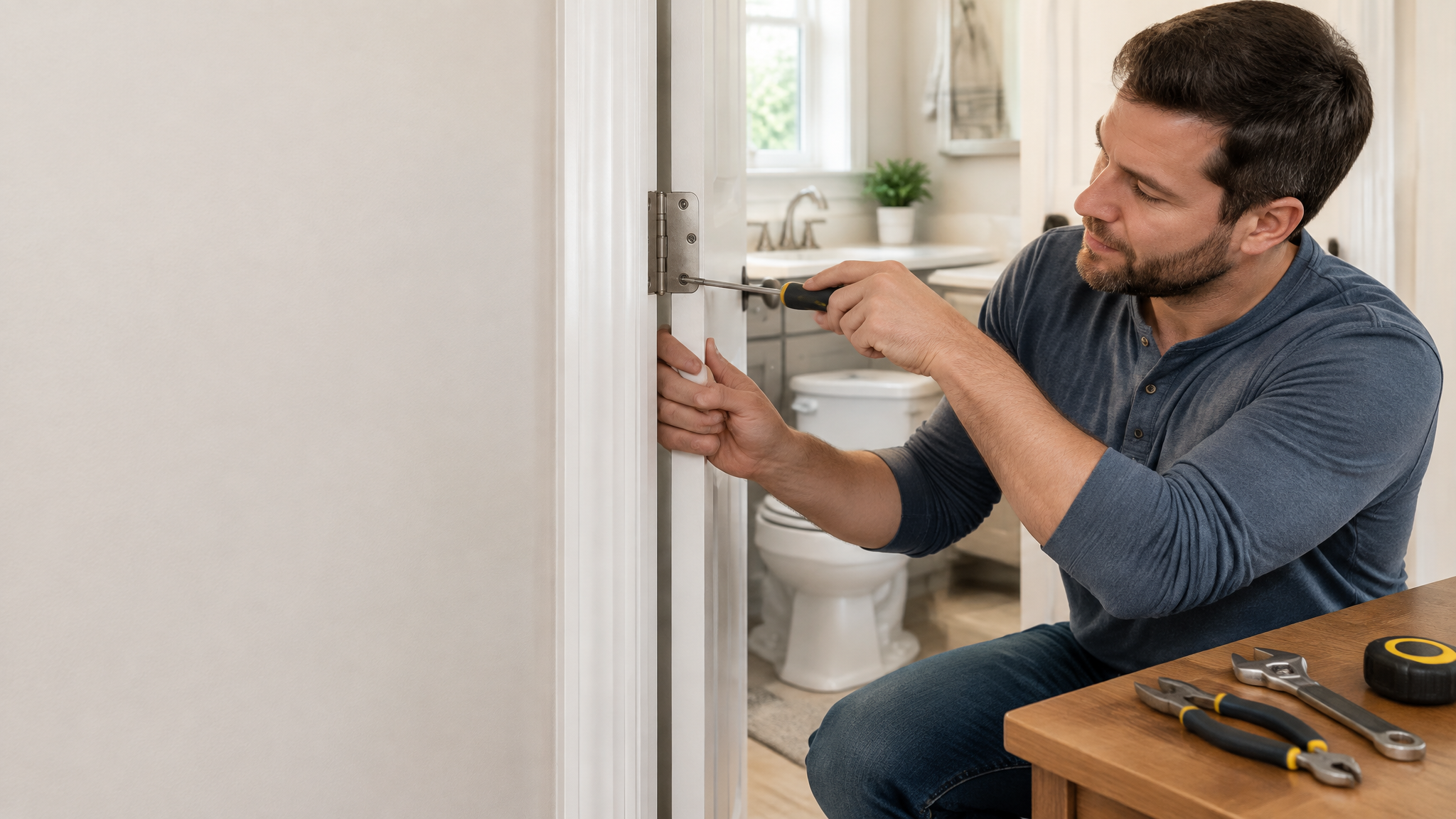
3. The Squeaky Door That Drives You Crazy
Every time a door creaks or groans, people either ignore it for months or make the mistake of spraying cooking oil on the hinges (which becomes gummy and collects dirt). Fixing it permanently takes seconds.
What is actually happening?
Friction between the metal hinge pins and the hinge barrels creates grinding sounds when lubrication dries out or dust enters the joint.
The 2-minute fix
Open the door slightly to relieve pressure on the hinges.
Tap the hinge pin upward using a flat-head screwdriver and light hammer taps, or simply wipe clean the surface joints.
Apply a dedicated silicone lubricant or white lithium spray directly into the hinge seams.
Swing the door back and forth several times to distribute the lubricant across the pin shaft. The noise disappears instantly.
4. Low Water Pressure from Faucets or Showerheads
If water pressure in your kitchen faucet or bathroom showerhead suddenly drops to a weak trickle while the rest of the house has normal pressure, your plumbing lines are rarely the problem.
What is actually happening?
Hard water contains dissolved calcium and minerals that precipitate out over time. These minerals get trapped in the aerator screen located at the tip of the faucet spout or the tiny rubber nozzles of your showerhead.
The 5-minute fix
For faucets: Unscrew the tip of the faucet (the aerator) counterclockwise by hand or using a pair of pliers wrapped in a cloth to avoid scratching the finish. Rinse out the mesh screen, use an old toothbrush to clear debris, and screw it back in.
For showerheads: If heavily clogged with limescale, fill a small plastic sandwich bag with white household vinegar, submerge the showerhead inside the bag, and secure it with a rubber band. Leave it for an hour to dissolve the mineral scale completely without taking the fixture apart.
5. Sticking or Jammed Sliding Drawers
Kitchen and dresser drawers that refuse to slide smoothly, stick halfway, or screech when pulled are often mistaken for warped wood or broken tracks.
What is actually happening?
Wooden slides dry out, and metal ball-bearing tracks accumulate kitchen grease, hair, and dust fibers that prevent rollers from spinning freely.
The 3-minute fix
Pull the drawer all the way out and remove it from the track.
Wipe away accumulated dust and debris along the runner tracks with a damp microfiber cloth.
For wooden tracks, rub a simple block of paraffin wax or an unscented candle along both the drawer guides and the cabinet rails. For metal roller glides, apply a quick-dry lubricant spray.
Reinsert the drawer—it will slide like brand new.
The $25 Starter Kit That Saves You Hundreds
You do not need an entire garage full of heavy machinery to handle 95% of household tasks. Having these few essentials tucked away in a kitchen drawer will resolve almost every basic emergency:
A multi-bit screwdriver: Handles Phillips and flat screws of varying sizes on appliances, handles, and outlet covers.
A standard pair of slip-joint pliers: Provides grip and leverage for stuck aerators, hoses, and small fittings.
White vinegar and baking soda: The safest and most effective natural unclogging and descaling agents for drains and mineral buildup.
A quality lubricant spray (dry silicone or PTFE): Keeps metal parts moving smoothly without attracting dust.
An adjustable wrench: Perfect for tightening loose water supply lines and toilet bolts.
Final Thoughts: Take Control of Your Home
Home repairs don't require years of trade school—they just require knowing where to look and taking five minutes before picking up the phone.
Every time you diagnose and solve a small problem with your own hands, you build confidence, keep your home running smoothly, and keep significant money in your bank account.
Want more simple fixes that save you time and money? Bookmark this page, explore our step-by-step guides, and join our community so you never overpay for basic maintenance again.